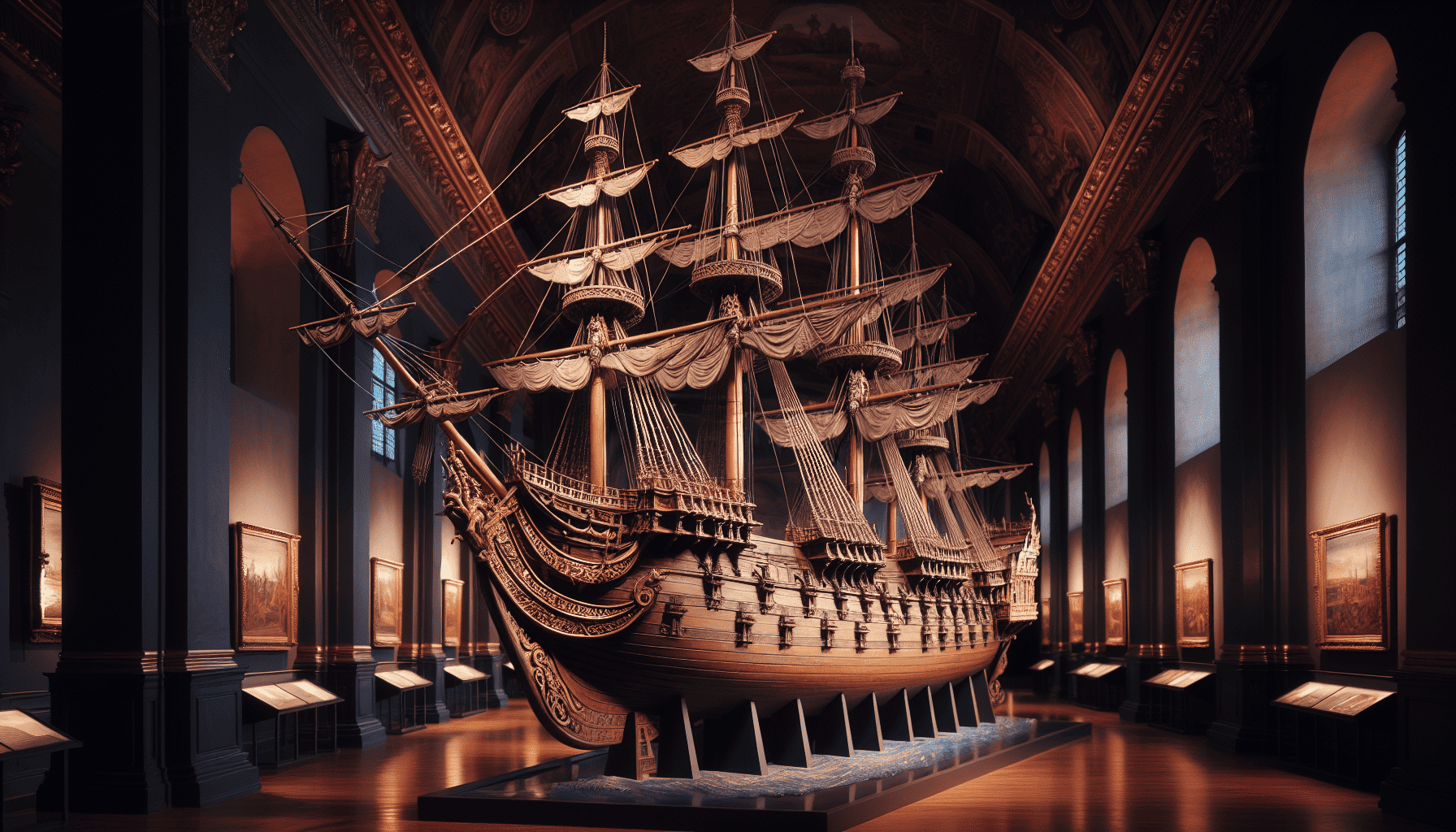
The Vasa ship's story is one of grandeur, ambition, and a testament to the challenges of naval engineering in the 17th century. As a legendary embodiment of Sweden's naval prowess, the Vasa signifies both the heights of craftsmanship and the humbling nature of human error.
Commissioned by King Gustavus Adolphus in 1625, the Vasa was intended to be the crown jewel of the Swedish navy, symbolizing the might of the burgeoning Swedish Empire. This pride and ambition are reflected in the ship's opulent design. The Vasa was adorned with intricate carvings and adorned with statues, each telling stories of biblical importance and honoring Swedish monarchs. Her grandeur was not only a product of artistry but also of the cutting-edge naval technology of her time.
However, the ambition that gave birth to the Vasa also sowed the seeds for her premature demise. Armed with an unprecedented number of cannons for its size, the ship faced critical design flaws due to a lack of sufficient ballast. This imbalance led to its tragic fate. On August 10, 1628, during her maiden voyage, the Vasa sailed a mere 1,300 meters from the Stockholm harbor before a slight gust of wind toppled her. She sank swiftly into the depths of the Baltic Sea, taking many of her crew with her.
The loss of the Vasa was a national tragedy for Sweden, a stark reminder of the shortcomings in naval architecture and engineering. For over three centuries, she lay undisturbed, a relic lost to the annals of time. It was not until the late 1950s that the ship would draw breath anew.
In one of the most remarkable feats of maritime archaeology and engineering, Anders Franzén, a naval enthusiast, discovered the Vasa in 1956. His efforts, combined with those of a dedicated team, led to the painstaking process of salvaging the ship. Using innovative techniques, the team successfully raised the Vasa to the surface in 1961, an endeavor that captivated the world. The effort was not just about raising a ship, but about reviving a piece of history that had been frozen in time.
Preserving the Vasa posed its own unique challenges. Having rested in low-salinity waters, the ship was remarkably well-preserved upon recovery but needed immediate interventions to prevent deterioration. Specialists embarked on a meticulous preservation process using polyethylene glycol, a method that would ensure the Vasa could stand the test of time.
Today, the Vasa is housed in the Vasa Museum in Stockholm, where she draws millions of visitors from around the globe. Still preserving over 98% of her original structure, she stands not just as a monument to Swedish craftsmanship but as a poignant reminder of the human spirit's determination to overcome challenges in pursuit of knowledge.
The Vasa ship is more than an artifact; it is a narrative thread connecting the past with the present, illuminating the aspirations and failures of a bygone era. It tells a story of ambition and humility, reminding us that even in failure, there is honor in learning, discovery, and preservation.