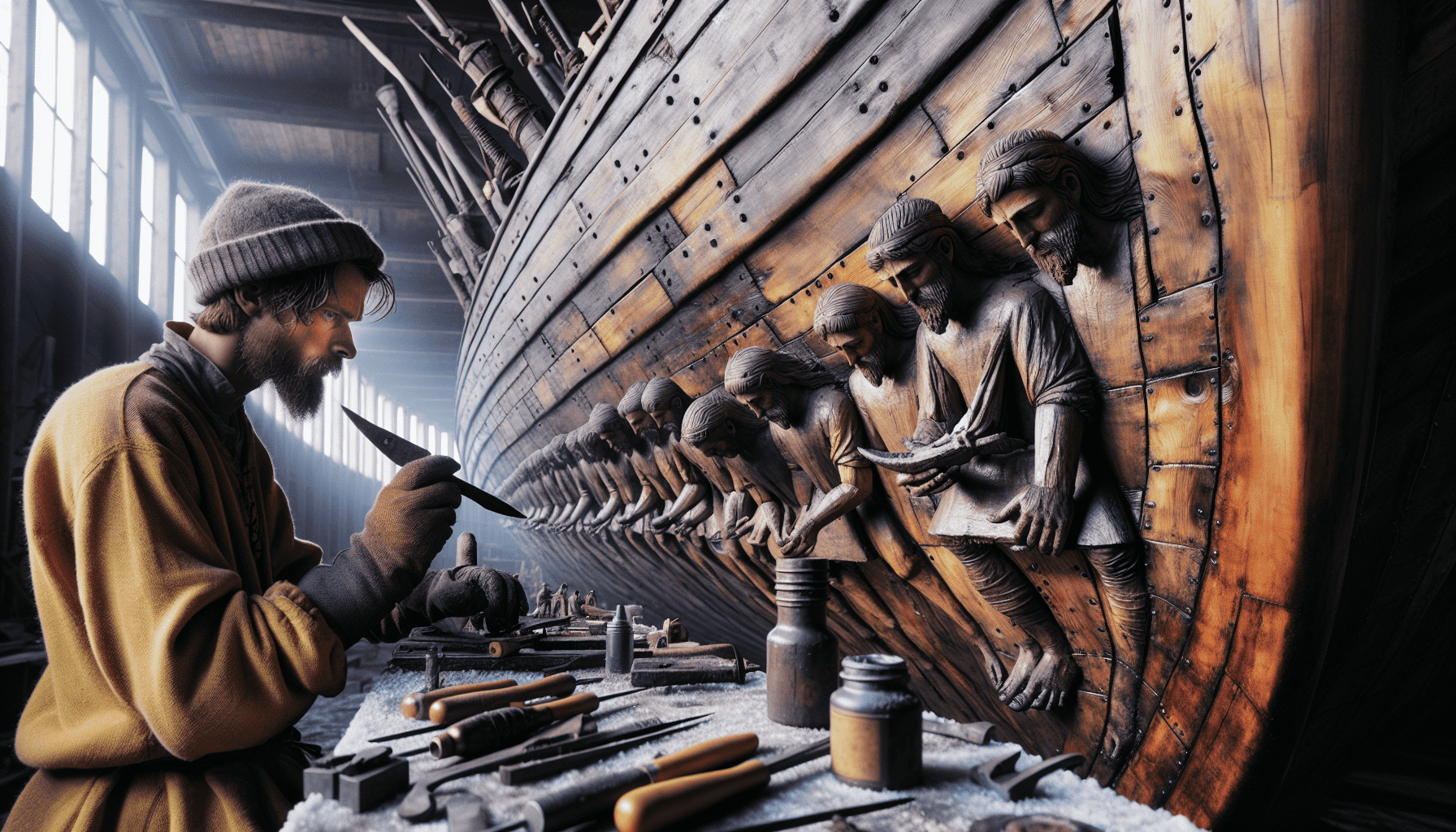
The Vasa ship, a 17th-century Swedish warship that sank on its maiden voyage in 1628, stands as a remarkable testament to both maritime history and the remarkable science of preservation. When the ship was salvaged in 1961 after 333 years underwater, it posed significant challenges to historians and conservators alike, primarily due to the intricate preservation techniques required to both restore and maintain it as a historical artifact.
The preservation of the Vasa ship is a story of scientific ingenuity and dedication. The restoration process began shortly after its retrieval, tackling the numerous issues posed by its centuries-long submersion. The wood used in its construction, primarily oak, had absorbed large amounts of water and was at risk of drying out and collapsing if not treated appropriately.
The initial preservation method employed was the use of polyethylene glycol (PEG), a water-soluble wax-like substance that gradually replaced the water in the wood. This process took nearly two decades, as the ship was systematically sprayed with a PEG solution. PEG stabilizes the wood by bulking it and preventing shrinkage, which could have led to structural damage. This innovative approach marked a turning point in maritime conservation, setting a precedent for similar endeavors.
Despite the successful initial preservation, challenges remained. Over time, the iron bolts used in the ship’s original construction began to rust and disintegrate, causing further instability. Conservators expertly replaced these bolts with modern materials that mimic the appearance of their historical counterparts while offering greater durability.
Another significant preservation challenge involves the ship's exposure to air and pollutants, which could contribute to the degradation of the wood. To mitigate this, the Vasa Museum, where the ship is housed, maintains a carefully controlled environment. The temperature, humidity, and air quality are closely monitored and adjusted to minimize the risk of further damage. This specialized environment is essential for ensuring the long-term preservation of the Vasa.
Furthermore, advanced conservation techniques continue to evolve. Researchers are constantly at work, exploring new methods and technologies to improve the ship's preservation. Recent developments include non-invasive laser cleaning to remove surface contaminants without harming the original wood structure. Additionally, researchers employ 3D scanning and digital modeling to monitor the condition of the ship and simulate various conservation scenarios.
Public engagement and education also play crucial roles in the preservation of the Vasa ship. By offering insights into both the history of the ship and the cutting-edge science behind its preservation, the museum fosters a sense of shared responsibility for its upkeep and encourages further interest in maritime conservation.
In conclusion, the preservation of the Vasa ship is a field in itself, combining historical expertise, scientific research, and innovative technology. It serves as a stunning piece of history, not only because of its original grandeur but also because of the advanced preservation techniques that keep it intact for future generations to admire and study. As we continue to learn and evolve in the field of conservation, the Vasa stands as both a monumental historical artifact and a living testament to human ingenuity in preserving the past.